Mushroom, Leek & Spinach Stew

With below average winter temperatures here on the Gold Coast at the moment I’m craving warm comfort food a bit more than usual… but tonight I was feeling pretty lazy.

I had my mind set on using up the button mushrooms and leek in my fridge so searched for some inspiration on Google. Nothing particularly hit the spot, so I ended up combining ideas from three different recipes: a vegetarian mushroom stroganoff, a leek & mushroom pasta dish, and an actual leek & mushroom stew…food fervour

It’s not like me to limit the veggie content to just three in most of my meals, but I was tired, and running behind, and just too plain lazy to go the extra mile. Maybe it had to do with the fact that I’d made a batch of gluten free cacao chip biscuits earlier in the afternoon and eaten a few too many of them?

Contrary to its deceptive title, this dish is not vegetarian: I deliberately opted for beef stock to pump up the stew’s flavour. Chicken stock would enrich the mushrooms as well, but Veggos, I am certain that veggie stock would still taste terrific, should you wish to try it (…and please let me know how you go if you do!)

For a solid single serve, you will need 2-3 tablespoons extra virgin olive oil, 1 finely chopped clove of garlic, 1 leek thinly sliced, salt & black pepper to season, approximately 200gm sliced mushrooms, 200mls beef (or veggie) stock, 1 teaspoon thyme, ½ teaspoon sage, 40gm cream cheese, 100gms baby spinach.

Heat 1 tablespoon of the olive oil in a frypan over a medium heat and cook the garlic and leek for 3-4 minutes (until the leek has softened) stirring occasionally. Season with salt & pepper, then add the remaining oil and the sliced mushrooms, cooking for another 3-4 minutes, again stirring occasionally. Add the thyme, sage & stock, bringing to a boil, then reduce to simmer for about 10 minutes. Mix the cream cheese through then add the spinach, stirring until it has just wilted.

Serve immediately and enjoy immensely! If you’re super hungry, I can imagine a chunk of bread would compliment this perfectly and help you mop up every last drop from your dish.

Mushroom & Lentil Bolognaise Stew

With Winter smacking us in the face this week, I felt the need for a nice thick, warming stew. But having had (what I considered to be) too much meat for some days prior, I wanted something plant-based… that would satisfy me.

Knowing how damned good legumes are for us (very high fibre and plant-based protein) and having a bag of mushrooms in the fridge that I knew needed to be used up, I began the search for a recipe but as usual, nothing I found comprised a vast array of veggies. So, true to form, I ended up adapting; fusing two different recipes together: one Thermomix Lentil & Veg Stew with a Mushroom & Lentil Bolognaise recipe on taste.com.au.

While I chose to make this using my Thermomix, it could be easily replicated by non-Thermie cooks because it’s a one-pot recipe. But a word of warning to Thermomix users: the quantities I used brought the bowl contents right up to the maximum (2 litres) so if you’re a little reticent, perhaps halve the quantities. It will still result in a decent amount of stew.food fervour

Grab the following:

35ml extra virgin olive oil, 1 onion, 2 garlic cloves, 1 large carrot, 1 stalk celery, 2 potatoes, 170gm uncooked brown lentils, 200gm button mushrooms, 2 tablespoons Thermomix vegetable stock paste + 600gm water (non-Thermies use 700-800ml vegetable stock), 2 bay leaves, 400gm passata (or entire contents of a 400gm tin of tomatoes)

Thermomixers: Add the onion (quartered) garlic cloves, roughly chopped carrot and celery to the bowl and chop for 5 seconds @ Speed 5. Scrape down sides then cook for 3mins @ 100ºC on reverse Speed 1. Meanwhile, dice the potatoes and roughly chop the mushrooms. Scrape down the sides of the bowl, add the potatoes, mushrooms, lentils, stock paste, water, bay leaves and passata (or tomatoes). Stir gently before locking the lid in place and cooking for 45 minutes @ 100ºC on reverse Speed ‘Stir’, with the MC off and the basket (or a light dishcloth draped) over the top to catch splatters.

Stovetop Cooks: Finely chop the onion, garlic, carrot and celery, then warm the olive oil in a large saucepan over a medium heat. Add the veg and cook for 3-5 minutes (until onion has softened) stirring occasionally while you dice the potatoes & roughly chop the mushrooms. Add the potatoes, mushrooms, lentils, stock, bay leaves and passata (or tomatoes) to the saucepan and bring to a gentle boil before reducing to a simmer, partially covered for approximately 40 minutes.

Allow the stew to rest for at least 5 minutes (ThermoServers are the perfect receptacle) before serving so that the some fluid may be further absorbed by the lentils. It’s a perfect meal on its own, or with spiralised zucchini noodles, but you could add some pasta if you feel that you need “carbo-loading” 😉

Quick Chicken Mushroom Stew

I LOVE a quick meal. Usually I’ll spend more time on Google looking for a recipe (to adapt!) than I’ll end up spending on the actual cooking process.

Last night I had two boneless chicken thighs to thawed and knowing my button mushies were only days away from turning funky, I searched “chicken mushroom recipes” and found a great, easy recipe on BBC Good Food (here’s the link to the original recipe).Food Fervour

Because I didn’t have all the required ingredients, and because I prefer a higher vegetable content in my meals anyway, I made some changes. (What’s new?!) I used the following:

2 (large) boneless diced chicken thighs, about 1 heaped tablespoon of cornflour, 1-2 tablespoons coconut oil, about 1 heaped tablespoon diced bacon, 1-1½ cups roughly chopped button mushrooms, 250mls chicken stock, approximately 1 tablespoon rice wine vinegar, 1 large chopped shallot, 1-1½ cups broccoli florets, 1 large thickly chopped zucchini.

While half of the coconut oil heats up in the frypan (over medium heat) coat the chicken in the cornflour. (You can do this one of two ways: the sustainable but messy method is to put them together in a bowl and use your hands to coat the chicken, or you could pop the meat & flour in a plastic bag, seal it, then jiggle the contents around until the job is done. I only chose the latter this time around because I had a plastic (food) bag I was about to dispose of.) Chuck the contents in the frypan and cook until the chicken is sealed and browned. Remove from the pan.

Add the rest of the coconut oil, the bacon and the mushrooms and cook, stirring, until the mushrooms soften. Pour in the stock and vinegar, scraping any cornflour from the frypan base and mix it through the liquid (the meagre amount of cornflour used in this recipe means the stew won’t be ‘thick’ in texture). Bring the chicken back to the mix and cook for about 10 minutes, stirring occasionally. Add the shallot, broccoli & zucchini and cook until the broccoli has turned a brilliant green (brighter than it was when raw) – no more than 5 minutes or you risk overcooking the greens. And that’s just no good!

Serve immediately, seasoning if you wish. This will feed two not-so-hungry people but I imagine it would satisfy the ravenous if served over rice. Because I felt like being ‘starchy-carb-free’ at the time, I managed to inhale the entire dish …by going back for seconds 😉 Umah!


Sustainable Eating

Let me just say, from the outset, that this may sound weird to most: I just got excited about making beef stock.

food fervourWell, that’s not exactly true. I have thought of jumping on the ‘bone broth’ wagon for a little while now, but only grabbed my grass-fed cow-parts a couple of days ago. Via a recipe on Jo Whitton’s old Quirky Cooking website, I prepared it and left it to simmer on the stove for almost 24 hours. Er, yes, even when I vacated the house & overnight while sleeping… (I know, a bit of a dodgy move) But now I have 3 litres of nutritious, gut-healing broth.

The exciting part is, I feel great knowing I’m using parts of the animal that a vast majority of people waste. Now I’m no saint (because offal & sweetbreads I just will not be able to manage) but considering I don’t usually consume a lot of meat anyway, I feel like I’m “doing my part” for the environment …and the cows. (Ok, so I’m nowhere near as virtuous as the Vegans and Veggos…)

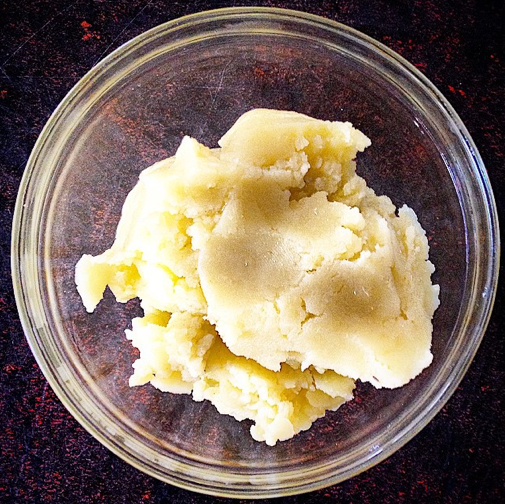
food fervourWhat made me super excited however, was discovering there was more than just a few litres of broth in this process: there was lard. Well, not exactly; having never used it before, I’m not sure what I’ll do with it…

What I meant to say was beef. Slow-cooked (braised) beef, from the stock bones. So not only did I have lots of broth, but also a substantial amount of protein left to eat. Meals for DAYS! That means my $8 for 2 kilos of cow bits has also saved me a fair bit of dosh.

The ready-cooked (falling-off-the-bone, melt-in-your-mouth) meat just needed a ‘theme’ and from the moment I saw & felt its texture, I knew I wanted Mexican. So all I had to do was fry up garlic, onion, spices, add the tomato passata, and some of my fresh broth before adding in the ‘shredded’ meat, to warm & soak up the flavours.

food fervour

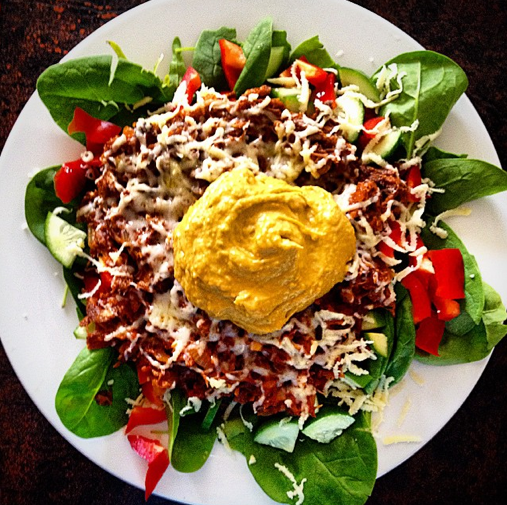
Mexican Shredded Beef with grated cheddar & tomato guacamole on a bed of baby spinach, cucumber & capsicum

Making a quick guacamole in the meantime, my Mexican Shredded Beef salad dinner was ready in a matter of minutes. (Alright ….discounting the fact that it took nearly 24 hours to cook the meat in the first place….) And I have enough left for two more meals. I think that’s called “value for money”. And maybe also “sustainable eating” 😉

The Meaning of Lunch

I have no idea why the word ‘Lunch’ brings up a particular meal description for me. Just like certain smells and songs have the power to evoke memories, for some reason, the word ‘Lunch’ to me means: a ham sandwich and cold chocolate milk.

I have, of course, eaten a huge variety of foods for ‘the midday meal’ in my 44 years, but for some strange & unknown reason, the ham sandwich, the chocolate (actually, Akta-Vite) milk and the time & place I consumed these, seems to have somehow forged an attachment to this one word.food fervour

Mum used to make our lunches for the most part. She would of course try to make us take responsibility ourselves, but ….lazy kids… say no more! Sandwiches were often the quickest, easiest meal and in that day-and-age of limited nutritional education, it stood to reason that these were what we were mainly fed.

Living in the tropics as well meant food preservation was a bit of an issue, but Mum got around that one with the help of the freezer. Making the lunches at night to freeze was also a time-saver in the mornings. Pack and go.

So my ham sandwich (cut in half horizontally, not diagonally, because it fit better in the lunchbox as two rectangles rather than triangles) and my Akta-Vite thawed out in time for ‘Big Lunch’. (In Australia, morning recess and lunchtime are known as ‘Little Lunch’ and ‘Big Lunch’. It’s fairly easy to work out, yes?) We would often eat most of our packed foodstuffs at ‘Little Lunch’ as well, leaving the morning tea fruit or whatever for the midday break.

The particular memory or image I have of myself consuming this specific menu is in my junior years at high school (so would’ve been twelve or thirteen years old). Ours was a brand new state school and there were as yet few places to sit and eat comfortably.

A couple of us are sitting cross-legged on some concrete at the rear of one of the classroom blocks and I have my lunchbox in my lap, and I’ve already vigorously shaken the plastic drink bottle full of the still-partially-frozen Akta-vite, ready to drink. I bite into the soft white bread sandwich, enjoying the saltiness of the ham chewing and swallowing before taking a swig of the sweet cold choccy milk. Ahhhh. Why do they go together so well?

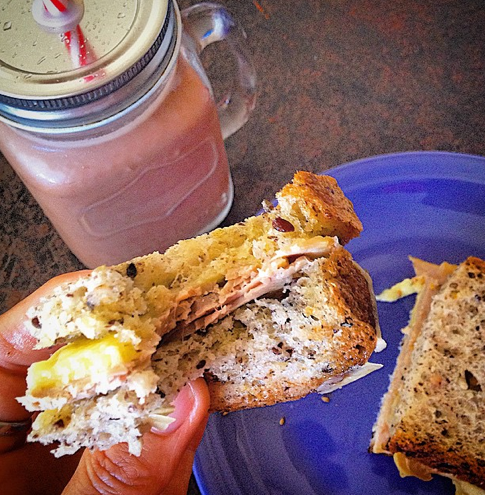
While I’d now consider this kind of meal a bit of a ‘fail’ in the nutrition stakes, every now and then I decide to treat myself to those ‘sensations’. Today was one of those days. But the end product was slightly different; slightly healthier thanks to my swap-outs.Food Fervour

Instead of mass-produced ham, I used a nitrite-free product. I replaced the white bread with a high fibre gluten-free version; my pure homemade butter in place of margarine (ugh!) and instead of the sugar-loaded (but ‘mineral-dense) Akta-Vite, I mixed cacao and a little maple syrup with my fresh, homemade rice & almond milk. Admittedly, I broke from tradition and added some melted tasty cheddar to the sanger today (see pic)…. who doesn’t love a ham ‘n’ cheese “toastie”?!

Craving satisfied, without the added stress on my internal organs. But I will want a heap of veggies for tea tonight! 😉

Asparagus & Sprouted Lentils with Avocado Sauerkraut Mash

The key to healthy eating is experimentation. Really, it’s not that hard, with the bottomless supply of information available at your fingertips on the net. I reckon I search for recipes (food ideas) pretty much every day of the week.

Today’s lunch was no exception. I checked out what I had in the fridge – paying particular attention to the veggies that needed to be used up first – and dived right into Google (the best thing since sliced bread….if you want to call that the best thing…)

Asparagus and sprouted lentils were first up. I found an appealing recipe (5th from the top of the first results page). But my (OCD!?) desire for nutrient density meant I had to search further. So I entered avocado & sauerkraut (just getting into sauerkraut for the first time in my life, so am kind of at a loss as to what to do with it) and found this interesting little recipe…

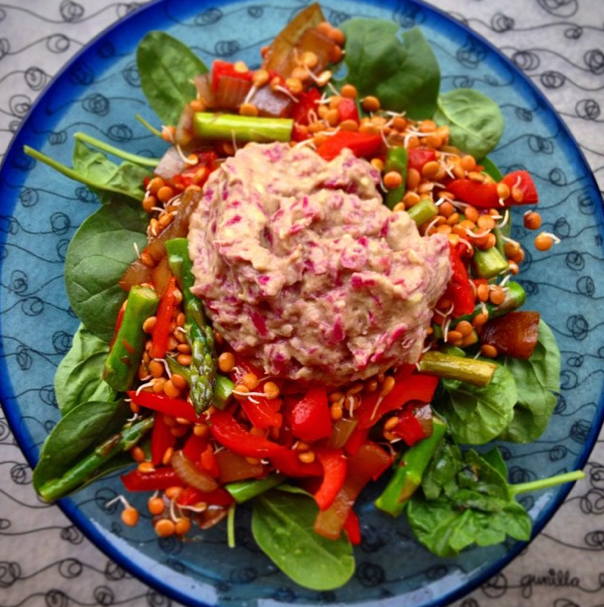
Envisaging how the two separate dishes may just compliment each other, I set to work, and produced this:food fervour

So, what’s in it? And in particular, what the hell is that stuff on top? It kinda looks like refried-beans-but-not? It’s actually avocado & sauerkraut.

I found the Sprouted Lentils with Asparagus recipe here, on the blog ‘My Own Private Kitchen’ and I altered very little: apart from the amounts (I’m ONE person) I omitted the basil, lemon juice, salt & pepper and I cooked in coconut oil instead. Oh yeah… and a lazy thing: I caramelised the onions in my Thermomix, per a recipe in Jo Whitton’s Quirky Cooking cookbook (making extra for later use, coz I LOVE caramelised onions).

The Avocado Sauerkraut Mash – on the website purelytwins.com – intrigued me. It’s so simple …but I found it needed something extra, and that extra was a dash of apple cider vinegar (lemon or lime juice might also do) for more, slightly sweeter, acidity. (I might’ve needed the added ‘oomph’ because my sauerkraut is homemade so could taste completely different – milder – than the stuff the twins use/d.)

To describe the processes super-briefly (for those who can’t be bothered visiting the links) here’s how it all came together:

Firstly I set the Thermomix to work on caramelising the onions for me (this takes about 20 minutes, the same amount of time as doing it yourself in a frypan) so I had time to prep my capsicum & asparagus. Frying them in coconut oil, over a medium heat for about 5 minutes, occasionally stirring, gave me time to make the ago mash simultaneously: halving an avocado, mashing & mixing it with 2 heaped tablespoons of sauerkraut. I pulled the veggies off the heat (leaving them in the frypan to ‘rest’) then mixed the (dash of) apple cider vinegar through the mash mixture and laid the bed of baby spinach on my plate. I added ½ cup of sprouted lentils straight into the frypan with the cooked capsicum & asparagus and stirred them through to warm. When the onions were done, I added about ¼ cup of them to the frypan, again mixing up the contents before placing them on top of the baby spinach. I scraped out every last bit of the avo sauerkraut mash from the mixing bowl and sat it on top of the lot.

It creates a visual feast, but you have to mix it all through when it’s time to consume: the sweetness of the onions and the capsicum counters & compliments the tang of the mash and there’s definitely one helluva lot of texture in the meal. You could also add a drizzle of olive oil and/or lemon juice if you prefer more moistness.

A Probiotic Toastie?

Since fermenting is now the latest thing in nutrition (to support and/or feed our gut bacteria which play possibly the mightiest role in our overall health) I have tried my hand at making sauerkraut, so that I have at least one natural, clean, ready-to-eat probiotic in my fridge…besides yoghurt, of course. Sauerkraut seemed like the easiest place for a Fermentation Beginner to start. “Probiotics 101”?

My first batch kind of failed, but my second attempt was a success. The question then became what to do with it. How do you eat it? I mean, how is it incorporated it into meals? After just eating it by the spoonful from the jar for awhile (hey, I don’t have to share with anyone so it’s ok!) I discovered it paired well with avocado: its salty tang, moisture and crunchiness compliments avo’s smooth, bland texture. I later realised that I could make a very quick, very simple tasty meal with some nutritional diversity, by adding in some ‘ever-ready-to-eat’ sprouted lentils I have stored in the fridge (no dressing required, thanks to the sauerkraut).food fervour

But today, I wanted something different; something a little more complex and filling. So I went hunting on the net, and came across a few recipes for ‘Reubens’: American-style sandwiches which usually include some kind of cured meat, like pastrami or corned beef. But then I found this vegetarian one: Vegetarian Reubens with Russian Dressing and it looked like something worth adapting.

Since I like to save time & effort (read: lazy!) I went without the dressing, adding avocado instead. It’s a surprisingly quick, warm nutrient-dense meal.

I quickly sautéed the mushrooms with chopped shallots, in coconut oil, pepper & salt, then added the baby spinach, stir-frying until it wilted. Removing that from the pan, I added some more coconut oil and lay my two pieces of gluten free bread, with the avocado already mashed on top, down to “fry-toast”.

A couple of minutes later the grill was warm enough, so I transferred my bread & avocado to the grill, then heaped the mushroom-spinach mix on top of one slice and my sauerkraut over the other, before laying slices of beautiful Nimbin Natural Tasty cheese over the top of both stacks. In less than a minute in my fast, hot grill, the cheese had melted beautifully so all I had left to do was press the two toasties together and transfer to a plate before devouring.food fervour

Now there’s a meal and a half, packed with nutrients, protein, fibre, good fats and of course ….wicked, gut-loving pro-biotics. 😉


Turmeric & Cumin Mushrooms

Food Fervour

These mushies are so addictive that I’ll eat them with my dinner as well as breakfast!

I have this ‘thing’ with turmeric: it’s so ridiculously good for you (anti-oxidant, anti-inflammatory, anti-ageing, anti-almost-every-disease-under-the-sun) that I’ve become quite motivated to find ways to get more of the stuff into me… without a huge deal of effort! In order to avoid cooking up a huge Indian curry every time I feel the ‘need’ for some, I started grating the bulb directly into and onto different foods.

Food Fervour

I originally liked grating turmeric over eggs

I find it quite enjoyable with egg, whether grated directly over poached or boiled, or added to a scramble or omelette mix. But one morning recently, whilst frying up some mushrooms to eat with some scramble, it dawned on me to try pairing them up with the turmeric instead. Since I usually always cook with coconut oil, and I tend to relate turmeric to Indian cuisine, I decided to try adding cumin as a balancing flavour.

Well, dang! I was blown away. Now maybe it’s just me, but the fact that I cooked and ate them twice in a space of 36 hours suggests that I was hooked!

It’s so simple it’s ridiculous. For a single serve you’ll need about a cup of roughly chopped button mushrooms, coconut oil, turmeric & cumin (fresh is best, but powdered will still do). Oh, and some (Celtic or Himalayan) salt to taste…

Whack a couple of tablespoons of the oil in a frypan over medium heat, then add about a teaspoon of each spice (more if you wish – especially the super-cool super-spice turmeric). Stir it up for a minute then throw in your mushies. Keep the coconut oil beside you, since they suck up the fat like there’s no tomorrow so you’ll more than likely need to add a bit more along the way. Cook for about 4-5 minutes, adding a good dash of Celtic or Himalayan salt to taste, and serve immediately, scraping as much of the flavour from the pan onto your plate as possible, too! Deeeelicious 😀


Liquid Health: Pros & Cons of Smoothies

I just gorged on cheese. I felt like some cheese on toast for lunch but thanks to my relationship with ‘instant gratification’ I started hoeing into the Nimbin Natural before my GF bread was toasted. Then I had a couple more pieces while the griller took its turn. So by the time I’d eaten, I was full as a goog (Aussie slang for “I’ve had sufficient”).

Now, with the stomach juices working hard (& loud!) I’m feeling a tad guilty about the lack of fibre & nutritional variety in that ‘meal’. Since there’s no way I could fit a whole salad in after all that (a sign in itself…) I’m going to ‘supplement’ with a smoothie.
Good old smoothies!
How did we ever live without them before? Nutrient-dense meals-on-the-run.
They are SO easy. So ridiculously easy. And they’re a blank canvas for the Creative. The one basic ‘rule’ I can ever recall hearing somewhere is:
60% FRUITS + 40% VEGGIES/GREENS

food fervourOf course, when you get used to them (that is, when you “harden up”!) you may find you can reduce the fruit component, which is a good thing for those who want to ‘control’ their fructose intake. Intensely flavoured components of a smoothie can disguise less palatable ingredients. If you have some idea of what fruits & vegetables go well together, you’re unlikely to go too far wrong. If all else fails… Google. There are literally thousands of recipes out there in the ether.

For this one I grabbed an orange, lots of strawberries & blueberries, a banana and a couple of dates and blended them with a chunk of cucumber, a stick of celery (leaves’n’all) a handful of baby spinach and some cabbage.
I blended the solids first to break them up as much as possible, then added my liquid (coconut water in this instance) for a smoother drink.

food fervour

So full… More for later!

The thing to remember with smoothies (and here I hark back to the ‘sign’ I mentioned during my cheese story) is that by liquefying your food, it’s easier to consume more than you need, plus there’s less work for your digestive system to undertake. While that can seem like a good thing  – and it can be when you are unwell and need all the energy (& nutrients) you can get for minimal effort, while your immune system is hard at work – healthy peops are likely to become hungrier sooner (despite ingesting a salad bowl’s worth of calories). Because your digestive organs aren’t really getting the ‘workout’ for which they were designed. They need the challenge of some tough fibre or dense proteins to breakdown in the same way your body responds to the fitness challenges you (should) apply to it in training!

To this end, I don’t believe smoothies should be consumed on a regular (daily) basis. After all, human evolution didn’t involve electric blenders!

For a meal on a run, yes – if you really CAN’T make the time. For instant gratification, yes, if you really CAN’T exercise self control. And heck, even for the occasional ‘nutrient supplementation’ after a very average meal (to wit: me, today) and at the expense of excessive energy intake!


Red Lentil & Veggie Curry

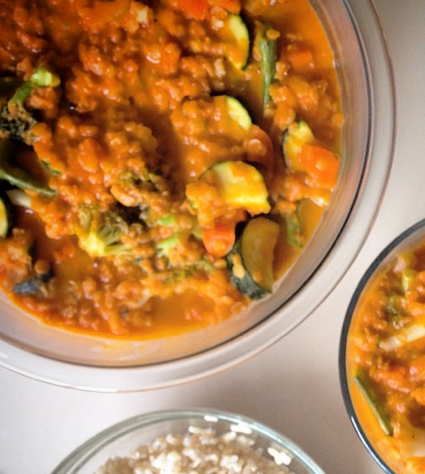
This is one of my fall-backs. You know: one of those recipes that is quick & failsafe and you know it’s full of goodness. It’s a slightly adapted version of a soup recipe I found in a Women’s Weekly cookbook I snapped years ago, because of its title:food fervour

All I’ve done is reduce the fluid ingredients to ‘thicken’ the soup to a curry consistency. Too. Easy.

To make this delish meal you will need the following:

1 teaspoon coconut oil, 2 tablespoons red curry paste, 400gm passata (or can of crushed tomatoes if you prefer) 2 cups chicken (or veggie) stock, 1 large diced carrot, 2 finely chopped celery stalks, ¾ cup (washed) red lentils, 2 cups broccoli &/or cauliflower florets, 1 large chopped zucchini, handful of roughly chopped snow peas, ⅓ cup (80ml) coconut cream, 2 tablespoons fresh coriander

Method:

Melt the coconut oil in a very large saucepan, then add the curry paste, stirring for about 1 minute. Add the passata/tomatoes, stock, carrot and celery, bringing to a boil before reducing to simmer for about 5 minutes.

Add the lentils (& cauliflower if using), cover and simmer for about 10 minutes. Add the remaining vegetables (broccoli, zucchini & snow peas) mixing well and leave to simmer again, covered, for 5-10 minutes (depending upon how ‘al dente’ you prefer your vege). Stir the coconut cream and coriander through just before serving. food fervour

I love this with or without rice and can even gulp it down cold from the fridge when I’m in a hurry. It makes at least 4 meals for me… and I’m a pretty big eater!

If you have a bit of a clue about curries, I’d encourage you to experiment with the vegetables. My attitude regarding them is “The More, The Better” 😉