Cravings & Improvisation

I once heard somewhere that cravings can be your body’s way of alluding to a lack of certain nutrients: for example, a desire for ice cream could mean you need calcium. food fervourNice thought, but moreover, great excuse to abuse yourself! If you need calcium, won’t a glass of milk or handful of sesame seeds suffice? Nope!

Cravings can really only be tackled psychologically. You either talk yourself out of it (which may increase the danger of its return, more powerful than before) or you cave. Or, you could try doing what I have taught myself to do. It works hmm, maybe 90% of the time? And that’s a pretty good strike rate for someone who can really lack willpower when it comes to food.

It only takes a few minutes of focus; to analyse what exactly it is you want from the particular food or drink you are craving. What ‘characteristics’: flavour, texture, temperature. Savoury or sweet? Crunchy or creamy? Warm or cold? Moist or dry? Sometimes this very process can diminish the craving, but at the very least it buys you time: time to avoid the instant (& usually poor quality) gratification option.

I used to crave ice cream after dinner. But I can’t have the stuff in the house because – apart from knowing how rubbish it is for me – it wouldn’t last 24 hours. I can – and have – demolished a tub in one sitting. But by putting a little thought into it, I worked out that it was actually the cool, moist, sweet creaminess that my taste buds craved, not necessarily ice cream. So I turned an ice cream habit into a Greek yoghurt with fruit and/or nuts, and/or cacao habit, which I’ve actually blogged about previously: You Don’t NEED Ice Cream
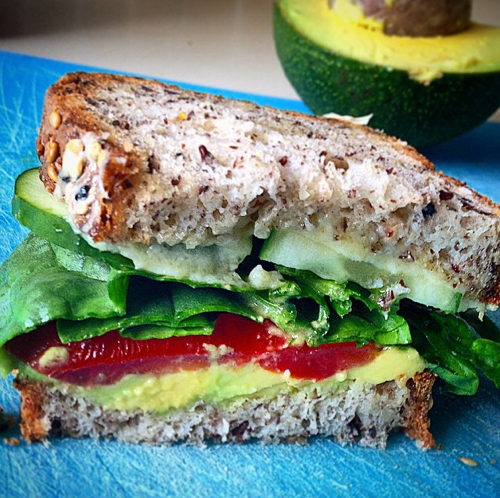
food fervourToday’s lunch was the result of a little bit of analytical thought as well. I had cheese on my mind. And avocado. Now I’m a fan of cheese on toast (in fact, it’s a ‘swap-out’ I have used to satisfy a sausage roll craving a couple of times in the past, believe it or not – warm, savoury) but I wasn’t so “one-eyed-and-desperate” enough to settle on such a simple meal, when I could easily pack more nutrients (& fibre) into it by adding some extra elements.

So my toasted cheese and avocado sanger became a toasted cheese, avocado, tomato, cucumber & baby spinach sandwich. That totally satisfied me.
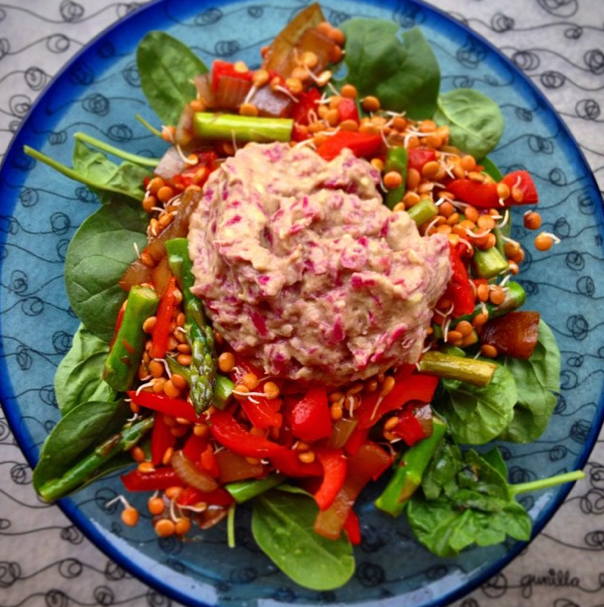
 

Asparagus & Sprouted Lentils with Avocado Sauerkraut Mash

The key to healthy eating is experimentation. Really, it’s not that hard, with the bottomless supply of information available at your fingertips on the net. I reckon I search for recipes (food ideas) pretty much every day of the week.

Today’s lunch was no exception. I checked out what I had in the fridge – paying particular attention to the veggies that needed to be used up first – and dived right into Google (the best thing since sliced bread….if you want to call that the best thing…)

Asparagus and sprouted lentils were first up. I found an appealing recipe (5th from the top of the first results page). But my (OCD!?) desire for nutrient density meant I had to search further. So I entered avocado & sauerkraut (just getting into sauerkraut for the first time in my life, so am kind of at a loss as to what to do with it) and found this interesting little recipe…

Envisaging how the two separate dishes may just compliment each other, I set to work, and produced this:food fervour

So, what’s in it? And in particular, what the hell is that stuff on top? It kinda looks like refried-beans-but-not? It’s actually avocado & sauerkraut.

I found the Sprouted Lentils with Asparagus recipe here, on the blog ‘My Own Private Kitchen’ and I altered very little: apart from the amounts (I’m ONE person) I omitted the basil, lemon juice, salt & pepper and I cooked in coconut oil instead. Oh yeah… and a lazy thing: I caramelised the onions in my Thermomix, per a recipe in Jo Whitton’s Quirky Cooking cookbook (making extra for later use, coz I LOVE caramelised onions).

The Avocado Sauerkraut Mash – on the website purelytwins.com – intrigued me. It’s so simple …but I found it needed something extra, and that extra was a dash of apple cider vinegar (lemon or lime juice might also do) for more, slightly sweeter, acidity. (I might’ve needed the added ‘oomph’ because my sauerkraut is homemade so could taste completely different – milder – than the stuff the twins use/d.)

To describe the processes super-briefly (for those who can’t be bothered visiting the links) here’s how it all came together:

Firstly I set the Thermomix to work on caramelising the onions for me (this takes about 20 minutes, the same amount of time as doing it yourself in a frypan) so I had time to prep my capsicum & asparagus. Frying them in coconut oil, over a medium heat for about 5 minutes, occasionally stirring, gave me time to make the ago mash simultaneously: halving an avocado, mashing & mixing it with 2 heaped tablespoons of sauerkraut. I pulled the veggies off the heat (leaving them in the frypan to ‘rest’) then mixed the (dash of) apple cider vinegar through the mash mixture and laid the bed of baby spinach on my plate. I added ½ cup of sprouted lentils straight into the frypan with the cooked capsicum & asparagus and stirred them through to warm. When the onions were done, I added about ¼ cup of them to the frypan, again mixing up the contents before placing them on top of the baby spinach. I scraped out every last bit of the avo sauerkraut mash from the mixing bowl and sat it on top of the lot.

It creates a visual feast, but you have to mix it all through when it’s time to consume: the sweetness of the onions and the capsicum counters & compliments the tang of the mash and there’s definitely one helluva lot of texture in the meal. You could also add a drizzle of olive oil and/or lemon juice if you prefer more moistness.

A Probiotic Toastie?

Since fermenting is now the latest thing in nutrition (to support and/or feed our gut bacteria which play possibly the mightiest role in our overall health) I have tried my hand at making sauerkraut, so that I have at least one natural, clean, ready-to-eat probiotic in my fridge…besides yoghurt, of course. Sauerkraut seemed like the easiest place for a Fermentation Beginner to start. “Probiotics 101”?

My first batch kind of failed, but my second attempt was a success. The question then became what to do with it. How do you eat it? I mean, how is it incorporated it into meals? After just eating it by the spoonful from the jar for awhile (hey, I don’t have to share with anyone so it’s ok!) I discovered it paired well with avocado: its salty tang, moisture and crunchiness compliments avo’s smooth, bland texture. I later realised that I could make a very quick, very simple tasty meal with some nutritional diversity, by adding in some ‘ever-ready-to-eat’ sprouted lentils I have stored in the fridge (no dressing required, thanks to the sauerkraut).food fervour

But today, I wanted something different; something a little more complex and filling. So I went hunting on the net, and came across a few recipes for ‘Reubens’: American-style sandwiches which usually include some kind of cured meat, like pastrami or corned beef. But then I found this vegetarian one: Vegetarian Reubens with Russian Dressing and it looked like something worth adapting.

Since I like to save time & effort (read: lazy!) I went without the dressing, adding avocado instead. It’s a surprisingly quick, warm nutrient-dense meal.

I quickly sautéed the mushrooms with chopped shallots, in coconut oil, pepper & salt, then added the baby spinach, stir-frying until it wilted. Removing that from the pan, I added some more coconut oil and lay my two pieces of gluten free bread, with the avocado already mashed on top, down to “fry-toast”.

A couple of minutes later the grill was warm enough, so I transferred my bread & avocado to the grill, then heaped the mushroom-spinach mix on top of one slice and my sauerkraut over the other, before laying slices of beautiful Nimbin Natural Tasty cheese over the top of both stacks. In less than a minute in my fast, hot grill, the cheese had melted beautifully so all I had left to do was press the two toasties together and transfer to a plate before devouring.food fervour

Now there’s a meal and a half, packed with nutrients, protein, fibre, good fats and of course ….wicked, gut-loving pro-biotics. 😉


Apple, Mint & Watercress Coconut Lassi

Glancing at my herb pots as I walked in from yoga this afternoon, I noticed how well my watercress was doing. So well that it looked like it might be beginning to suffocate my curly parsley. That’s not ideal. My mint has bounced back again too (it is temperamental sometimes) and I was suddenly struck by wonder: do watercress and mint go well together? Surely they do?

food fervour

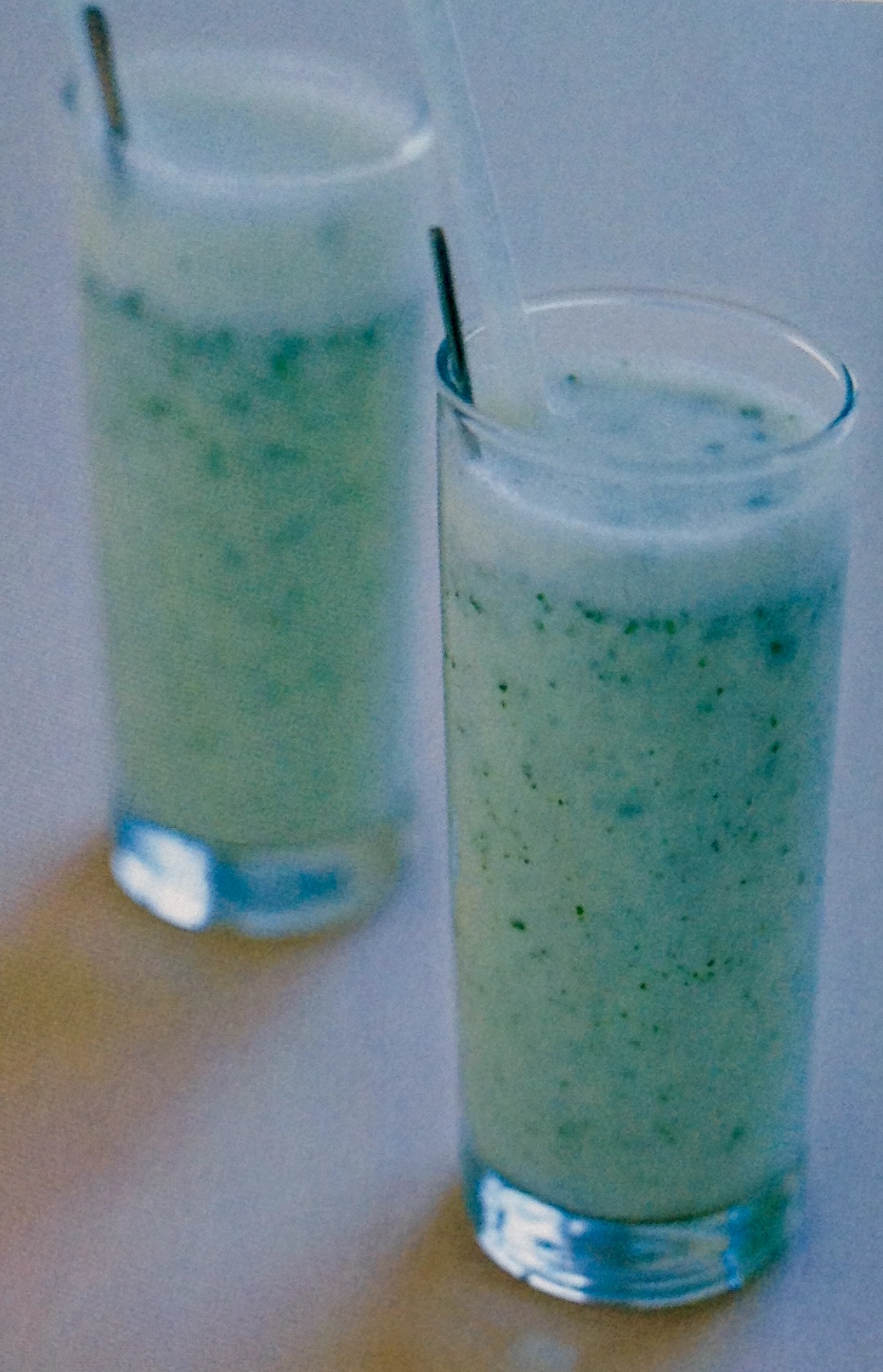
The apple & melon lassi from one of my recipe books

Watercress, as I have mentioned before (in a previous post, see here) has been recently crowned the most nutrent-dense plant food, so I am pretty keen on getting it into mah belly as much as possible …and away from my poor parsley plant. Mint is a renowned ant-acid. And both herbs have a fiery ‘freshness’ about them.

Since I wasn’t overly hungry, I decided a drink was all I needed right now and my train of thought led me from the usual option – a smoothie – to the memory of a particular recipe I knew I had somewhere in one of my books. ‘Apple’ and ‘mint’ were swimming around my head while I checked recipe book indexes. Then I found it. A Lassi.

So I set about re-creating the apple & melon lassi recipe with my own, preferred ingredients and was totally chuffed with the result.

For one large serving, you’ll need 1 peeled, cored, chopped apple (you could keep the skin on if organic, as long as your blender is high-powered enough to break it down) 1 banana (mine was frozen) a handful of mint leaves, a handful of watercress leaves, approx 60gm of coconut cream and 200gm coconut water. (NB: fluid measures in grams because I use a Thermomix.)

food fervourSimply throw everything in and blend until smooth. (Thermies: 1½ minutes at Speed 9) It is so refreshing!

Besides your run-of-the-mill mint variety, I also have some chocolate mint growing in the same pot so included that in my ‘handful’. You could vary the concentrations of coconut cream & water to alter thickness, but I think the more cream you use, the less intense the apple & herbs flavours may be. I have considered how a nip of vodka or apple schnapps might alter the creation, but I know the truth is, it would most likely negate all the nutritional benefits of the greens…!


Liquid Health: Pros & Cons of Smoothies

I just gorged on cheese. I felt like some cheese on toast for lunch but thanks to my relationship with ‘instant gratification’ I started hoeing into the Nimbin Natural before my GF bread was toasted. Then I had a couple more pieces while the griller took its turn. So by the time I’d eaten, I was full as a goog (Aussie slang for “I’ve had sufficient”).

Now, with the stomach juices working hard (& loud!) I’m feeling a tad guilty about the lack of fibre & nutritional variety in that ‘meal’. Since there’s no way I could fit a whole salad in after all that (a sign in itself…) I’m going to ‘supplement’ with a smoothie.
Good old smoothies!
How did we ever live without them before? Nutrient-dense meals-on-the-run.
They are SO easy. So ridiculously easy. And they’re a blank canvas for the Creative. The one basic ‘rule’ I can ever recall hearing somewhere is:
60% FRUITS + 40% VEGGIES/GREENS

food fervourOf course, when you get used to them (that is, when you “harden up”!) you may find you can reduce the fruit component, which is a good thing for those who want to ‘control’ their fructose intake. Intensely flavoured components of a smoothie can disguise less palatable ingredients. If you have some idea of what fruits & vegetables go well together, you’re unlikely to go too far wrong. If all else fails… Google. There are literally thousands of recipes out there in the ether.

For this one I grabbed an orange, lots of strawberries & blueberries, a banana and a couple of dates and blended them with a chunk of cucumber, a stick of celery (leaves’n’all) a handful of baby spinach and some cabbage.
I blended the solids first to break them up as much as possible, then added my liquid (coconut water in this instance) for a smoother drink.

food fervour

So full… More for later!

The thing to remember with smoothies (and here I hark back to the ‘sign’ I mentioned during my cheese story) is that by liquefying your food, it’s easier to consume more than you need, plus there’s less work for your digestive system to undertake. While that can seem like a good thing  – and it can be when you are unwell and need all the energy (& nutrients) you can get for minimal effort, while your immune system is hard at work – healthy peops are likely to become hungrier sooner (despite ingesting a salad bowl’s worth of calories). Because your digestive organs aren’t really getting the ‘workout’ for which they were designed. They need the challenge of some tough fibre or dense proteins to breakdown in the same way your body responds to the fitness challenges you (should) apply to it in training!

To this end, I don’t believe smoothies should be consumed on a regular (daily) basis. After all, human evolution didn’t involve electric blenders!

For a meal on a run, yes – if you really CAN’T make the time. For instant gratification, yes, if you really CAN’T exercise self control. And heck, even for the occasional ‘nutrient supplementation’ after a very average meal (to wit: me, today) and at the expense of excessive energy intake!


Nutrient Dense Porridge

Let me start out by saying my motivation for this post was not the great breakfast I just had. It was the thought behind it; my general philosophy about food. If we are meant to be eating less (portion control) how are we meant to get all the nutrients in? By thinking. And being creative. Yes, you need a little education, but it’s really NOT hard. Here’s my example…

I’m not necessarily a porridge fan. I have found I usually digest it too quickly and can feel hungry again within 3 hours. This I put down to the fact that in cooking the oats, I’m removing some of the workload that my digestive system would otherwise be lumbered with, in breaking down the food. Now, in Winter it gets pretty hard chowing down on my usual bircher brekky: eating or drinking cold makes me cold from the inside, so I turn back to porridge (it’s the quickest thing to make before I start work, especially in the Thermomix). The question is, how to make it last longer?

Simple: add protein and/or healthy fats and/or fibre. Most of us know – or have surely heard by now – that fibre, protein & fats are satiating. Fibre & protein usually because of their ‘complexity’, fats because of their density. So my go-to porridge recipe is now a mix of oats and protein rich quinoa flakes & chia seeds, with whatever milk I’m feeling on the day. It has made a huge difference.

So my point is: get a little educated & be creative. Learn something about REAL foods and the nutrients they contain, especially those with the highest quantities (this is why I believe vegetables should be the base of the Food Pyramid: no other food group contains same the array & density as this plant matter) and it will be easy to find ways to slot them into your meals without having to eat them in ‘excess’. (And for the record, even though I don’t throw the word into my recipes, ‘organic’ choices are definitely first option.)food fervour

So with that, here’s the recipe for a (sizeable) single serve of this morning’s apple cinnamon & chia porridge:

½ grated apple, 35gm oats, 5-10gms quinoa flakes, 5gms (1 head teaspoon chia) seeds, 90gm water, 150gm milk of choice (today I used almond) 1 teaspoon cinnamon, coconut sugar to taste.

Stovetop cooks place apple, oats, quinoa & chia, water & milk into saucepan over a medium-low heat, reducing to simmer as the mixture begins to bubble. you’ll need to stir continuously. I honestly have forgotten how long it takes to make porridge on the stove top, but I would think it would be about 8-10 minutes, similar to the Thermomix cooking time.

Thermomixers you can ‘grate’ your apple in the bowl for 5 secs speed 5, or Turbo a couple of times. Then add the oats, quinoa, chia, water & milk, cooking for 8 mins, 90ºC reverse speed 2.

Serve immediately, stirring through the cinnamon with any extra milk you may or may not like to add and top with coconut sugar to taste *not TOO much*!

Coeliacs would evidently replace oats altogether, using 40-45gm quinoa flakes however since quinoa (& especially chia) will require more fluid you may need to almost double the fluid quantities. Stove-top cooks will be able to gauge the mixture thickening, Thermomix users won’t. Trial & error. That’s what it’s all about!

Watercress & Cashew Dip

Out with the kale, and in with the watercress! I have to admit I am a bit of a trendite when it comes to nutrition, but my motives are pure; I simply try to consume the most nutrient-dense foods I can. And I don’t think it’s such a bad habit, training myself to include as many “super foods” in my diet as possible.

It was this chart on David Gillespie’s “Sweet Poison” Facebook page that changed my mind:

A Life in Words(David Gillespie sourced this from the following website: Centers for Disease Control & Prevention)

Don’t get me wrong, I’ll still eat kale. But I’m quite happy that my preferred leafy green – spinach – ranks higher in value!

But the fanatic I am, well, I HAVE to include it if it tops the list! So at the very next farmers market, I sought out a bunch of watercress… without considering exactly what I’d do with it. I’m not really into plain old sandwiches per se, and I’ve really only thrown it into green smoothies in the past. So I Googled. But the results were quite uninspiring.

It was while I was entertaining a couple of my closest girlfriends on the following weekend that the idea came to me: Dip! Surely if spinach and basil make decent ‘dip heroes’, why not watercress? As far as I could see, it was the best way to use a tonne of the stuff quickly. And since it’s quite fibrous, pulverising it in a powerful blender or Thermomix is ideal (as in green smoothies) because you can use more of the plant (stems etc). MORE fibre, less waste.food fervour

So I created a dip from the first spinach & cashew recipe I came across in a Google search. Watercress has a bitterness to it but also seems to leave your palate refreshed and I found that the cashews complimented it perfectly: countering the bitterness with their natural sweetness, without destroying the herb’s ‘freshness’.

It’s also dead easy: simply blend ⅓ cup cashews, 1 firmly packed cup of watercress (or a big handful!), ¼ cup olive oil, a decent dash of Himalayan salt & 1-2 tablespoons of lemon juice (to taste) until smooth. This may require a few pauses to scrape down the sides of the blender (or bowl if you use a Thermomix).

It also makes a great sandwich spread, and I even made a salad dressing of it by mixing in a little extra lemon juice & oil. What better way to pump up the nutritional value of other meals?

Green Smoothies Don’t Have to be Green…

Take this for example:food fervour

In fact, I’d say most of the green smoothies I make are brown. Because I LOVE cacao. Why not have a chocolate flavoured smoothie if you have the choice?

Cacao is the raw form of cocoa and therefore even more nutrient dense. And its (delicious) strong flavour helps disguise the bitterness that many kale varieties posses. The smoothie I just made (pictured) had 4-5 kale leaves in it and it only took 2 heaped tablespoons of cacao powder (oh ok, and the dates) to camouflage the acrid (but oh-so-healthy) green.

You really can have a lot of fun experimenting with green smoothies. If you are new to them, work off the ratio of 60% fruit to 40% greens until you acquire a taste.

For this particular smoothie (it made enough for two, by the way) I threw 2 bananas in the Thermomix, with 4-5 de-stemmed kale leaves, about 2 heaped tablespoons of cacao powder, 4-5 dates, a handful of (frozen) blueberries and approximately 300mls coconut water and blended it all on for about 40 seconds on Speed 9. For non-Thermies, blend for as long as you need to on the highest speed (to really break down the dates and kale).

I shouldn’t have any muscle cramps for the rest of the day, with the amount of magnesium (thanks to the Cacao & coconut water) in this drink. 😉

Cacao Avocado Mousse

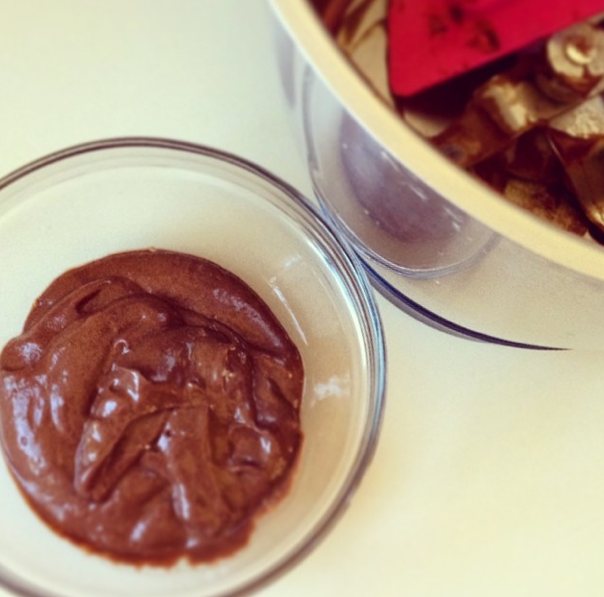
The final touch for the best Mother’s Day pancakes is another too quick-and-simple but nutrient dense treat that can be enjoyed entirely on its own. Or with fruit (especially blueberries)! I love my fruit, can you tell?

The avocado makes this dish. Its naturally creamy texture and bland taste make it one of the most versatile super foods out there and I think people are only just beginning to discover its true potential. It’s the (very healthy) fat content that makes it work as a mousse…a mousse full of vitamin E; not what you’d expect to find in a conventional nor commercial version.food fervour

So, grab 1 small avocado, ¼ cup (approx 20gm) cacao powder, 1 dessertspoon maple syrup and IF you want to thin it down so it’s like a runnier ‘sauce’ over the pancakes, you’ll also need at least ¼ cup (45gm) milk (any kind you prefer) milk. Or even coconut water coz it’s naturally sweet, and well as (phyto)nutrient dense.

Simply throw it all in your chosen blending appliance, ‘wazz’ it ups few times, scraping down the sides in between. Actually, because avocado is so easily broken down, you could pretty much blend by hand. If you wanted. Meh, save your energy!

Soooo easy. And soooo good.


Walnut, Apple & Cinnamon Coconut Balls

I’ve got a few organic green apples building up in my fridge and since I promised the Manager of Eden Health Retreat (where I work as a Fitness Therapist) a treat this week, I’ve put on my creative thinking cap. Apple goes so well with Cinnamon, yes? And Walnuts. Even though they aren’t the most appealing nuts in the taste department (unlike roasted almonds or cashews!) they are PACKED with goodness. So if you’re not a fan, maybe these morsels will help you to ingest them. You really should try to use organic apples as well, since they absorb more chemical residue (from pesticides, fertilisers etc) than many other fresh foods. Every year the Environmental Working Group (US) releases a list of the top 12 (“The Dirty Dozen”) foods to avoid if grown conventionally and apples seem to always appear near the top of the list. Here’s a link to the current list and the EWG site if you want to take a look: http://www.ewg.org/foodnews/list.php

It’s been a long time since I have made ‘balls’. I went through my obsession with them about 6 or 7 years ago when I first delved into the Raw Food arena, but found them a little time consuming and messy to make, all up. Yes, not a great advertisement I realise, but I “gots ta be” honest! Even with the Thermomix, it’s the rolling out and coating of the little suckers that chews up your time…and dirties your hands.Food Fervour

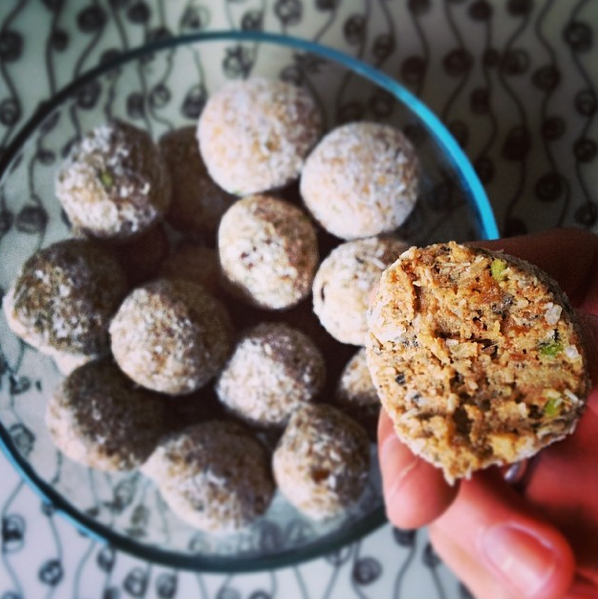
Nonetheless, I had an idea (and some time) yesterday, so I was going to test it out. Lucky for me, it worked. Well, the boss-man hasn’t had his share yet, but my physio and some of my private training clients have given them the thumbs up! (See, training with me doesn’t involve suggestive purchase of protein/nutrtional supplements or products…. my clients get to be guinea pigs for my whole, clean food experiments!) Warning: they won’t be really sweet, but if you use a sweeter variety of apple it could suffice. As a LAST RESORT, if you HAVE to add sugar (wusses!) I think coconut sugar would be your best option.

Basically you will need:

1 cup (130gm) dates, 1 cup (250gm) water, 1 apple, 1½ cups (150gm) walnuts, 2-3 heaped tspns ground cinnamon, 1 cup (60gms) desiccated coconut (extra for rolling), 3-4 teaspoons chia seeds.

Soak the dates in the water for at least an hour, then drain as well as possible, pressing out excess fluid out (I told you your hands would get dirty!) Place roughly chopped apple (skin ON, for nutrient density & fibre – unless it’s not organic & you are justifiably concerned) in a high-powered blender (Thermomixers, you know it!) until finely chopped. This will invariably involve a few stop-starts as you’ll need to scrape down the sides of the blender. Set the apple aside, rinsing & drying the blender as well as possible so that you can ‘pulverise’ (or not: sometimes chunks are good!) the walnuts. (Thermies: 5-10 secs, speed 7ish) Add the cinnamon, dates, apple, coconut and chia seeds, then blend and scrape until you feel the mixture is well enough combined.

Now, the messy part: pop some extra desiccated coconut on a large (dinner) plate and …..go wash your hands again! To make sure the balls are really ‘compact’ I palm roll them first, then roll in the coconut, and palm roll them again. Store in an airtight container in the fridge.